Take Your Rest: The Fourth Commandment Part 03


The Jewish Sabbath 

Remember the sabbath day, to keep it holy. 9 Six days shalt thou labour, and do all thy work: 10 But the seventh day is the sabbath of the Lord thy God: in it thou shalt not do any work, thou, nor thy son, nor thy daughter, thy manservant, nor thy maidservant, nor thy cattle, nor thy stranger that is within thy gates: 11 For in six days the Lord made heaven and earth, the sea, and all that in them is, and rested the seventh day: wherefore the Lord blessed the sabbath day, and hallowed it Exodus 20:8-11 

In many ways, the fourth commandment is a wonderful thing: it is meant to be benign, beneficial, and refreshing. It is God’s way of telling you - in short - to ‘take your rest.’ In the busy beehive world we live in, what a wonderful gift this is.

Yet, as we learned, the blessing of Sabbath was marred by man-made rules and regulations that made it more a burden than a blessing. Many interpretations, and home-cooked traditions distorted the Sabbath beyond recognition. When Jesus of Nazareth came to the scene with the true interpretation and practice, He was accused of Sabbath-breaking and His opponents were so bent out of shape by His conduct that they wanted to kill Him over the Sabbath.

Even until now, a few Christian groups have adopted the same legalistic mindset. They teach that unless you strictly keep the Sabbath on Saturday, you are in danger of hell-fire. Another demand, though slightly less dramatic, is that Saturday Sabbath-keeping, like religious circumcision for male infants, is not an ala carte, ‘pick and choose’ cafeteria-style proposition. It is a package deal: you are duty-bound to keep all the law of Moses, which is a flagrant violation of the liberty principles found in Galatians and other New Testament epistles.

What should our present day attitude towards the Sabbath be? How does it apply to Jews and Christians?

To The Jew First

A very important passage on Israel and the Sabbath is found in Exodus 31:12-17. Verse 16 it says ‘the children of Israel shall keep the sabbath … for a perpetual covenant.’ The next verse, 17, reiterates that it is a sign between God and the children of Israel for ever.

From this passage alone, we can infer that the Sabbath, as originally instituted at Sinai, was made for Israel. It is what marked them as God’s peculiar people. One of its key purposes was as a memorial to creation, where God ‘rested’ and was ‘refreshed.’

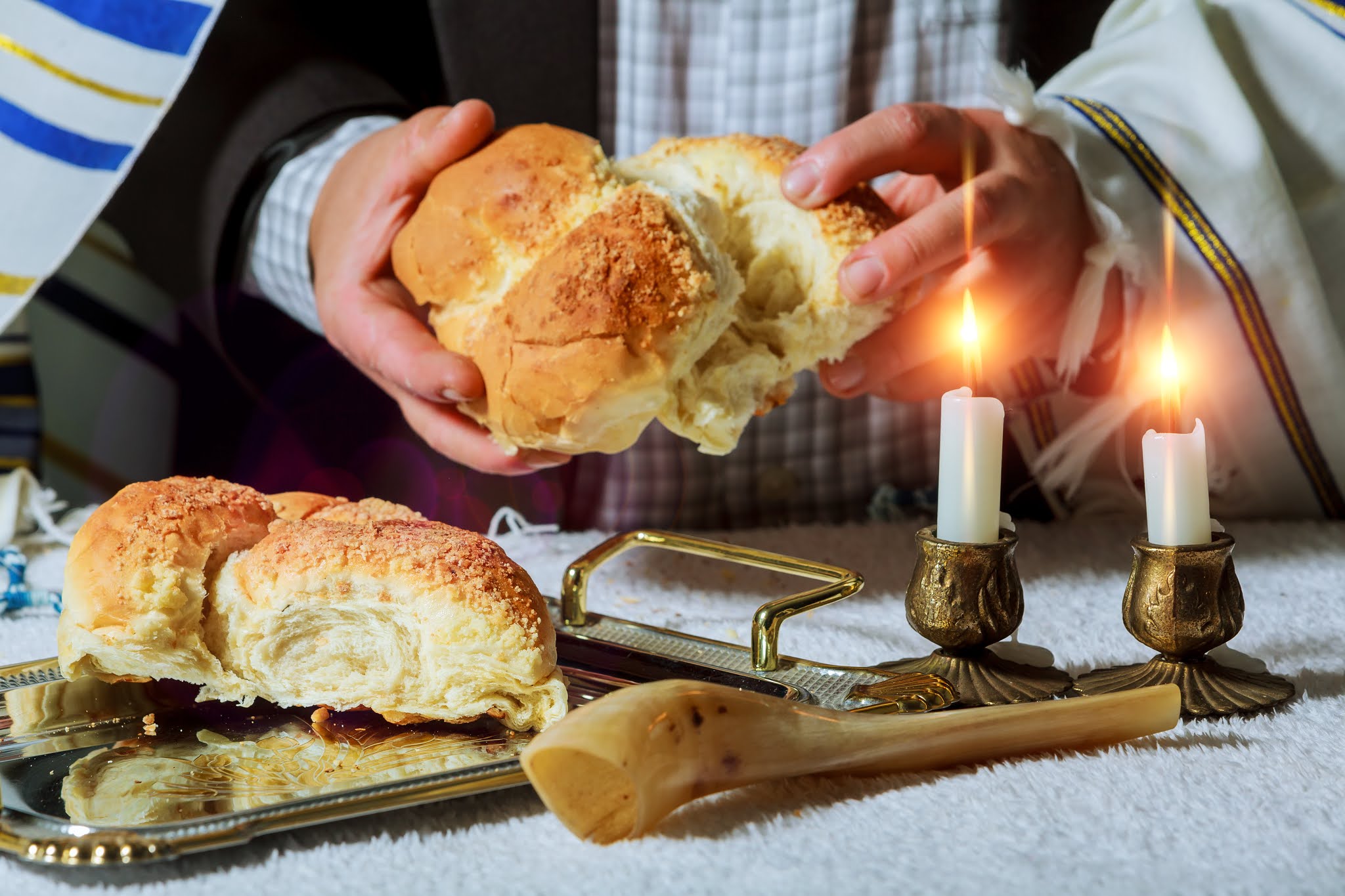
While there are various ideas and practices among the Jewish community regarding Sabbath, it is universally recognised as a ‘day off,’ ‘day of rest,’ ‘a time with family,’ a morning or evening at the synagogue, and the much loved Sabbath-meal that commences with candle-lighting. In most cases, it is doubtful that they view it as necessary for salvation; it is simply part of recognised Jewish practice, along with other commands of the Torah, which they have done for centuries.

Of course, in modern Israel, it is a national day off. As expressed before, it is amazing to see a bustling nation come to a grinding halt - seemingly suddenly - and remain that way for 24 hours. There is a lesson in this for us all.

In our next article, we will see how the Christian should respond to the Sabbath.


Comments

Popular posts from this blog

The 2025 Los Angeles Fires: The Bigger Issues

The new year had barely begun when New Orleans was rocked by a jihadist car ramming attack on the 1st of January. In Las Vegas, there was an explosion in front of the Trump hotel. Then, on the 7th of January, what arguably could be the most destructive fire in American history commenced. They are called the Los Angeles fires. Thousands of homes and businesses have been burned to the ground. Prestigious suburbs like Pacific Palisades or working-class Altadena look like war zones. Thousands of acres and buildings in America’s second-largest city have been destroyed and dozens have lost their lives or are recorded missing. People were told to evacuate their homes. Many abandoned their cars along the way because of the impasse. Thank God, they made it out alive but they lost everything but the clothes on their backs. It is a humanitarian crisis of the highest order. Like Australia, Southern California is dry and prone to fires. With the history and technology, there should have been pruden...

Taming the Tiger: Lessons We Can Learn from the Trials of Tiger Woods

He may be the world’s greatest and richest golfer. He may have charmed Australia during his recent tournament visit, which the Herald Sun said that he was welcomed back anytime. Then came the car crash, the rumors, followed by a parade of girlfriends coming out of the woodwork. The revelations did not come as a drip-drip but more like a deluge. Tiger Woods, with that big winning smile, winning swing, and clean-cut family friendly image had been revealed as a serial adulterer. You don’t even have to have an interest in golf to know that Tiger Woods was a golfing winner -- but now he looks like a humiliated loser on the home front. He may have gained the whole world but lost his marriage. Apart from being fodder for late night talkshow hosts and some humorous headlines like: Tiger or Cheetah? Tiger Shows His True Stripes Too Crowded in Tiger’s Lair Lust in the Woods Some incredibly serious issue emerge. CELEBRITY STATUS : Society is enamoured with celebrities and success; in m...

The Twelve-Day War of June 2025: Israel and Iran Have We Turned A Corner?

After years of debate, negotiations, threats and risks, the inevitable finally came: military action. Israel pre-emptively attacked Iran’s nuclear program while neutralising its nuclear scientists and top military men. There was the Six-Day War of June 1967; now we have the Twelve-Day War of June 2025. The combatants: Israel, Iran, and briefly, the United States. Despite all this, have we turned a corner? The state of war started in 1979 after the successful installation of a theocratic, fundamentalist, puritanical regime called the Islamic Republic of Iran. The Islamic Republic overthrew the Shah of Iran, the last sovereign of a monarchy which lasted 2,500 years since the days of Cyrus the Persian, who is prominently mentioned in the Bible. The Shah was replaced by a Shia Muslim cleric, called the Supreme Leader, who possesses broad executive powers, more than the elected Iranian President. The Supreme Leader is the most powerful person in the country. From Day One, Iran announced its...